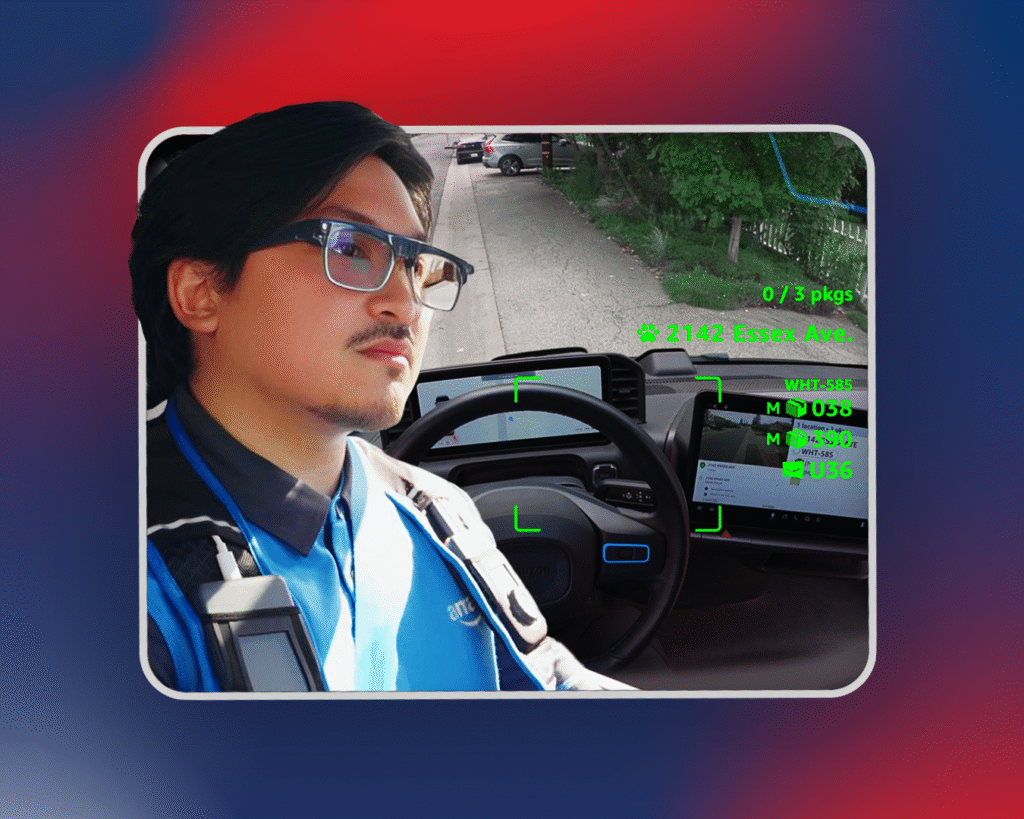
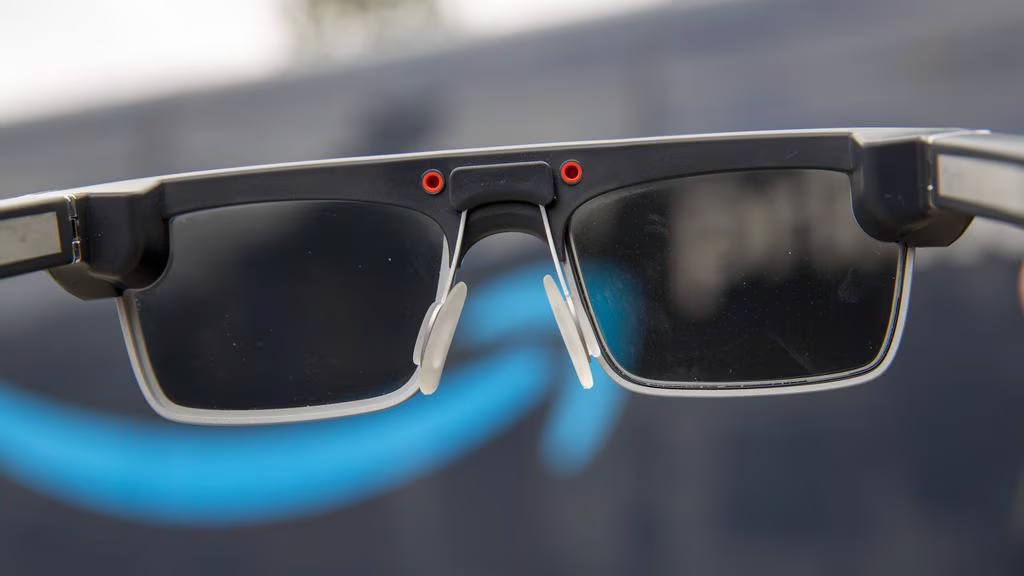
When Amazon unveiled a prototype of its AI-powered smart glasses for delivery drivers, it didn’t look like science fiction anymore, it looked like tomorrow’s normal.
The new “Amelia” glasses combine a built-in display and camera with a connected vest. Drivers can see turn-by-turn directions right in front of their eyes and tap a physical button on the vest to snap a photo as proof of delivery. No phone in their hand, no juggling a scanner while carrying three boxes to a front door.
At Amazon’s scale, shaving just a few seconds off each stop matters. With millions of packages moving every day, those seconds add up to hours, and hours add up to serious money. If Amelia works as intended, it could free drivers from handheld GPS units, help them move faster through buildings and neighborhoods, and even guide them around gates, tricky walkways, or that one yard with the not-so-friendly dog.
But behind the slick demo there’s a harder reality. According to people familiar with the project, Amazon is still wrestling with some very real constraints: building a battery that can last a full eight-hour shift without making the glasses heavy and uncomfortable; mapping every driveway, curb, sidewalk, and front door well enough for the system to be truly reliable. They also point to a human challenge that’s just as big as the technical one: convincing thousands of drivers to actually wear the glasses, especially those who already use prescription eyewear or worry about feeling constantly watched.
Safety and control have become part of the design conversation too. Amazon says Amelia can detect when it’s in a moving vehicle and shut itself off to avoid distracting the driver. There’s also a hardware switch on the controller that lets drivers turn the glasses, and all their sensors, including the camera and microphone – completely off if they choose.
If Amelia delivers on its promise, Amazon estimates it could create up to 30 minutes of efficiency per 8–10 hour shift, simply by cutting repetitive tasks and helping drivers find the right package faster inside the vehicle. For a network the size of Amazon’s, that’s a massive gain.
But the real question for the rest of the industry is this:
What do smart glasses and AI wearables actually mean for logistics beyond Amazon – for long-haul truckload operations, for sensitive freight like pharmaceuticals and electronics, and for everyday carriers, not just tech giants?
At KSM Carrier Group, we pay close attention to trends like this precisely because we sit at that crossroads – between the reality of the road and the new technologies that promise faster, safer transportation.